
No. 73
Crime, Eccentricity, and the Sporting Life in 19th Century America.
March 04, 2012

Inspector Thomas F. Byrnes.

March 4, 2012
...
...

Tag: Missouri

The Scandal Which Agitates St. Louis.

Astounding Revelations of a Low Cunning and Vile Curiosity in One of the Proprietors of the Grand Opera House.

7/23/2024

His Wife Danced the Coochee-Coochee.

She and her friends had been drinking wine, and they gave the sedate hubby an unexpected treat when he arrived at his home in St. Louis Mo.

2/14/2023

Kidnapped in Broad Daylight.

Miss Alice Jackson, of St. Louis, seized by three men who hurry her into a coach and drive away.

10/16/2017

A Bride’s Toggery.

An inquisitive male sees the contents of a bride

8/27/2013

Dan Creedon in Training.

6/4/2013
At the end of the day, we take a moment to note that June 6th was also the date of Abby & Andrew’s anniversary. I wonder if Lizzie thought about that while sitting in the courtroom today?
More...
Lizzie Borden: Warps and Wefts - 6/6/2026
"As his son I am proud of hisefforts to succeed in life"Jefferson Randolph Smith IIIArtifact #93-2Jeff Smith collection(Click image to enlarge) oapy's son hires a legal firm to stop the defamation of his father's name. At age 30, Jefferson Randolph Smith III, Soapy and Mary's oldest son, was protecting his father's legacy and his mother's reputation from "libel" and scandal. He was also
More...
Soapy Smith's Soap Box - 10/13/2025
 Welcome to this week's Link Dump!I'm sure our host this week needs no further introduction.  The caption says it all.A medieval anti-war satire.Mysterious meat shower?  Or vulture vomit?The paranormal side of the Cold War.Ernest Hemingway, boxing, and, uh, salad dressing.The man who blew up a nuclear power station.Mystery in a medieval tomb.More proof that scientists have way too
More...
Strange Company - 6/5/2026
Youth With Executioner by Nuremberg native Albrecht Dürer … although it’s dated to 1493, which was during a period of several years when Dürer worked abroad. November 13 [1617]. Burnt alive here a miller of Manberna, who however was lately … Continue reading
More...
Executed Today - 11/13/2020
In 1830, Joseph Knapp conspired with his brother, John Francis Knapp, to hire a local criminal, Richard Crowninshield, to murder their great uncle, Captain Joseph White, in Salem, Massachusetts. They believed that if the captain died without a will, they stood to inherit a sizable fortune.Read the full story here: "A Most Extraordinary Case"
More...
Murder By Gaslight - 6/6/2026
Say what you want about Robert Moses. But as Parks Commissioner in the 1930s, he opened 11 new public municipal pools across the five boroughs—helping residents keep cool and resist the lure of swimming in the East or Hudson River, which amazingly people used to do. Moses, a swim fan himself, also championed and helped […]
More...
Ephemeral New York - 6/1/2026
  [Editor’s note: Guest writer, Peter Dickson, lives in West Sussex, England and has been working with microfilm copies of The Duncan Campbell Papers from the State Library of NSW, Sydney, Australia. The following are some of his analyses of what he has discovered from reading these papers. Dickson has contributed many transcriptions to the Jamaica […]
More...
Early American Crime - 2/7/2019
Being Initiated. | Their Name a Misnomer.

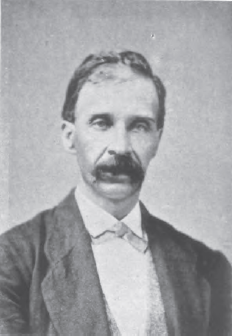
Inspector Thomas F. Byrnes.

Third Degree

Thomas Byrnes and his men giving a suspect the "third degree."

[more]

The nineteenth century saw the rise of the professional detective, both public and private, as a leading figure in the fight against crime. On a city police force, it was no longer sufficient for an officer to grab a ne’er-do-well off the street and throw him into jail, he must also gather the evidence and testimony needed to convict the perpetrator. The force needed men—and sometimes women—with the ability to read clues and follow the trails of a criminal class growing ever more sophisticated at eluding detection. In the private sector as well, agencies sprang up to provide these services to those who, for whatever their reason, were not interested in making their investigations public.

The National Night Stick begins a series of post on The Great Detectives, with New York City Police Inspector Thomas F. Byrnes, who, almost singlehandedly transformed the department from a collection of club wielding thugs to a modern, efficient crime fighting organization. Under Byrnes’s leadership, police procedures were standardized and criminal information was stored systematically; the New York City Police became the model for police departments throughout the country.

Thomas Byrnes became a police patrolman in 1863, and that same year he distinguished himself during the New York City draft riots.  He rose through the ranks on the strength of his outstanding arrest records and in 1872 became Captain of the Fifteenth Precinct. During this period, Thomas Byrnes led the investigations of a number of famous New York City crimes: the murder of Jim Fisk, the murder of Maud Merrill, the Manhattan Savings Institution robbery. When the first detective bureau of the New York City Police Department was established, Thomas Byrne was made chief inspector.

Rogues Gallery
"Rogues Gallery"

The core of Byrnes’s crime solving success was the employment of extreme interrogation methods, known as “the third degree,” to extract information. With two of his men holding the suspect, Byrnes would put on a leather glove and beat the man—in places where the bruise would not show—until he revealed the required information. He would also employ deception and run undercover operations, sometimes using ex-prostitutes to obtain information. No criminal passed through the New York Police Department without being photographed, and Inspector Byrnes maintained a "Rogues Gallery" of mug shots, and a private museum of burglary tools and weapons.

Thomas F. Byrnes

Thomas Byrnes was also a master of self-promotion. In 1886 he published the photographs of more than 200 criminals along with brief biographies of each and explanations of various criminal techniques in his book Professional Criminals of America. The book was ostensibly for the benefit of police departments throughout America, but it became popular with the public and has been reprinted numerous times. (Now in public domain, the book is the source of the material in The National Night Stick’s Rogue’s Corner.”) Some of Byrnes cases were romanticized in books such as A Tragic Mystery, The Great Bank Robbery, and The Fatal Letter. Purported to be “From the Diary of Inspector Byrnes;” the books were written by journalist/author, Julian Hawthorne, son of novelist Nathanial Hawthorne.

But not everyone was impressed with Thomas Byrnes. The ethics behind his methods, which were often no better than those of his rivals, put him at odds with reformers and journalists. In a rush to find the killer of East Side prostitute Carrie Brown—whose murder was being compared by the press to those of London’s Jack the Ripper—he railroaded Ameer Bin Ali, convicting him on tampered evidence. Journalists Jacob Riis and Charles Edward Russell campaigned to have the verdict overturned, and eleven years later they succeeded.

Cases like this one, along with Byrnes close association with Tammany Hall, began to tarnish his image. He was never able to satisfactorily explain how he had amassed a personal fortune of $350,000 on a salary of $5,000 per year. In 1895, when reform-minded Theodore Roosevelt was appointed Police Commissioner, Thomas Byrne was forced to resign. In spite of his flaws, Thomas Byrne left a lasting imprint on American law enforcement as was truly one of The Great Detectives.


Sources:

  • Byrnes, Thomas. Professional criminals of America. New York, N.Y: Cassel, 1886.
  • Conway, J. North. The big policeman: the rise and fall of America's first, most ruthless, and greatest detective. Guilford, Connecticut: Lyons Press, 2010.
  • Defenders and offenders. New York: D. Buchner & Co., 1888.
  • Hawthorne, Julian. A tragic mystery from the diary of Inspector Byrnes. New York: Cassell, 1887.