




Tag: Texas
What Led to a Divorce.
What a Husband Discovered, and How a couple were separated.

The Diamond King.
J. I. Lighthall, better known as the Diamond King, was a charismatic showman and a master of marketing, but he was also a dedicated healer.
Beauty as a Shield.
Beauty Conquers avarice and outlawry "We won't rob this house to-night."
Crush Collision!
Crush, Texas, September 15, 1896
Strange Company - 10/19/2026
Early American Crime - 2/7/2019

Soapy Smith's Soap Box - 10/13/2025

Murder By Gaslight - 10/17/2026
Executed Today - 11/13/2020

Beautiful Forever. | Tennis.
A Minister’s Scrape.
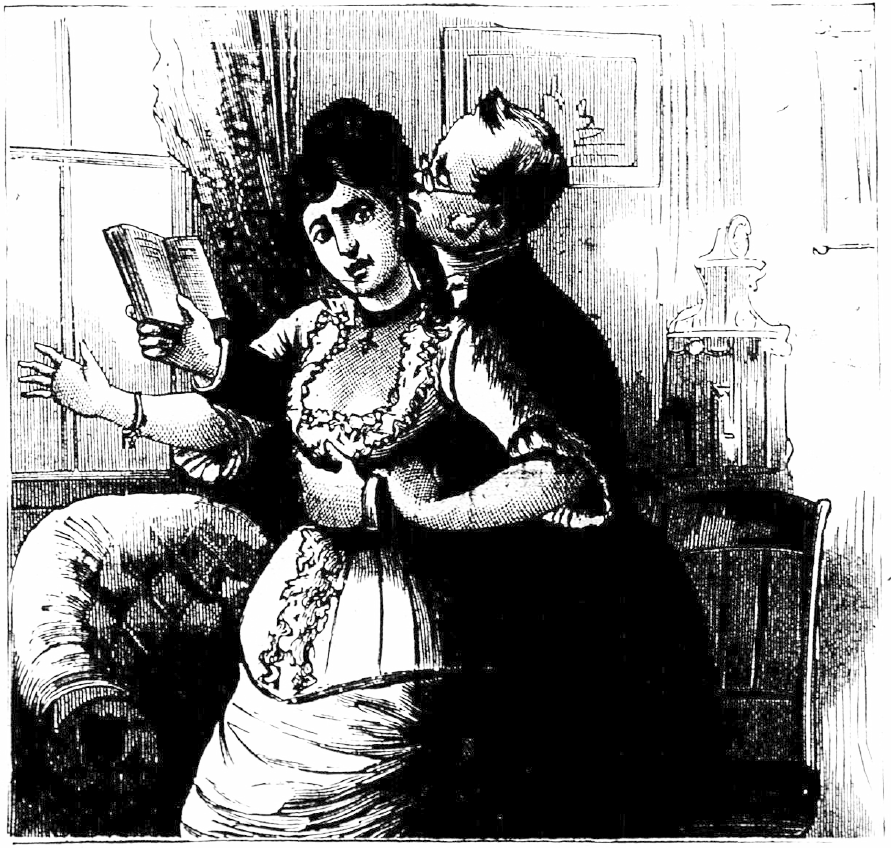
A parson while instructing a pretty parishioner how to sing psalms forgets his duty and indulges in other exercises; Branchville, N. J. [more]
Placed Under Bonds to Answer a Charge Made by an Indignant Husband—Kissing and Squeezing Alleged.
The usually quiet village of Branchville, Sussex county, N. J., was startled from its propriety as by a galvanic battery, on Thursday last, when Rev. Thos. D Frazee, pastor of the Methodist Church of that place, was arrested by Constable Dillotson on a charge of attempting too much and violent familiarity with Mrs. Albert Halstead, a pretty young member of his church. Branchville has only six hundred inhabitants, and since the arrest they have been busy with the pastor’s name and fame in a manner that does not add greatly to his ministerial credit.
The principal of these stories has been sworn to by Mr. Albert Halstead, the husband of the lady who makes the charge against Mr. Frazee, and is in a fair way to come before the courts at an early day. The story that Mr. Halstead tells is as follows:
About a week ago Mr. Frazee came to my house for the avowed purpose of teaching my wife, who is a member of his church, how to sing some Hymns that he wished to have sung in church. Upon his very first visit he attempted to kiss her. She objected, and he told her it was no harm for her to allow such familiarity to her pastor. He then produce a hymn book and stinging behind my wife held the book in front of her face, his arm under hers, he looing in the book over her shoulder. This was bad enough but he kept time in an improper manner.
My wife did not notice this at first because she thought he did it innocently; but after a while it he became more emphatic in his time-beating motions, and my wife, disengaging herself from his embrace, asked him what he meant by such conduct. He feigned surprise at her thinking he intended anything improper, and left. On Monday of this week, he came to my house again, and my wife’s little sister being in the room, almost the first thing he did was to send her out for some peaches.
No sooner had she left the house than he made improper proposals to my wife, and on her resenting the insults, he attempted to force her to yield to his unholy desires; but in this, thank God, was not successful, and alarmed at my wife’s screams, he hastily fled from the house.
On the following day he returned and asked my wife to shake hands and make it up, but she refused and ordered him from the house. I was not at home at the time, but as soon as I heard of Mr. Frazee’s conduct I called on him in relations to the matter. He did not deny the charges I made against him, but told me I had better let the matter drop, as I was a poor man and people would not believe me. I told him that if I was poor I was honest, and that I intended to show him whether people would believe me, and I have cause his arrest as the readiest way of determining the matter.
Mrs. Halstead is about twenty years old and bears an excellent reputation in the village and wherever she is known.
Rev. Mr. Frazee is about thirty-five, has an amiable wife and one child. In addition to being pastor of the Branchville Methodist Church, of which he has been in charge for about eighteen months, Mr. Frazee is one of the editors of a Newark religious paper.
Mr. Frazee was placed under bonds to answer the charge preferred by Mr. Halstead, and the matter will be investigated.
Reprinted from "A Minister's Scrape." The National Police Gazette 9 Oct 1880.
Welcome to the National Night Stick
"We follow vice and folly where a police officer dare not show his head, as the small, but intrepid weasel pursues vermin in paths which the licensed cat or dog cannot enter."The Sunday Flash 1841



- 1810s
- 1820s
- 1830s
- 1840s
- 1850s
- 1860s
- 1870s
- 1880
- 1880s
- 1890
- 1890s
- Abduction
- Abortion
- Accident
- Actors
- Adultery
- Advertisement
- African Americans
- Alabama
- Alcohol
- Allan Pinkerton
- America
- Animal
- Assault
- Axe Murder
- Bank Robbery
- Barnum
- Baseball
- Beer
- Bet
- Bicycle
- Billiards
- Bio
- Boston
- Boxing
- Boys
- Broadway
- Brooklyn
- Brothel
- Buffalo
- Burglar
- Burglary
- Burlesque
- California
- Canada
- Cartoon
- Censorship
- Chicago
- children
- Chorus Girls
- Christmas
- Cincinnati
- Civil War
- Clergy
- Clubbing
- College
- Colorado
- Comstock
- Con Game
- Connecticut
- Counterfeit
- Court
- Cowboy
- Crime
- cross-dressing
- Crossdressing
- Cursing
- Dancing
- Deception
- Delinquents
- Denver
- Detectives
- Detroit
- Dime Novels
- Disaster
- Disguise
- Disorderly conduct
- Divorce
- Domestic Violence
- Drowning
- Duel
- Editorial
- Election
- Entertainment
- Event
- Fad
- Family
- Fashion
- Fight
- Fire
- Florida
- Food
- Football
- Forger
- Fraud
- Gambling
- Gangs
- Georgia
- Great Detectives
- Gunshot
- Hoax
- Holiday
- Horses
- Hotel
- Illinois
- Indiana
- Insanity
- Jail Break
- Jealousy
- Justice
- Kansas
- Kentucky
- Little Murders
- Louisiana
- Lynching
- Maine
- Marriage
- Maryland
- Massachusetts
- Medicine
- Michigan
- Minnesota
- Missouri
- Montana
- Murder
- Music
- Nevada
- New Hampshire
- New Jersey
- New Orleans
- New Year
- New York
- New York City
- Newsboys
- Newspaper
- Nudity
- Obscenity
- Ohio
- Opium
- Pennsylvania
- Performer
- Petrified man
- Photography
- Pickpocket
- Poisoning
- Police
- Police Gazette
- Politics
- Prank
- Prison
- Prostitution
- Railroad
- Rape
- Rats
- Reform
- Religion
- Reporters
- Revenge
- Rhode Island
- Robbery
- Romance
- Saloon
- San Francisco
- Scandal
- Science
- Seasonal
- Sex
- Slashing
- Society
- Spiritualism
- Sport
- Sports
- Spousal Abuse
- St. Louis
- Stabbing
- Steamboat
- Steamship
- Stock Broker
- Suicide
- Summer
- Tammany Hall
- Temperance
- Tennessee
- Texas
- Theatre
- Theft
- Thomas Byrnes
- Valentine
- Vigilantes
- Voyeur
- War
- Washington D.C.
- Wife beaters
- Winter
- Women