

No. 509
Crime, Eccentricity, and the Sporting Life in 19th Century America.
March 03, 2020
An Adventure with a Sea-Lion.

With open mouths and protruding tusks, they warn the intruder agents too near an approach.
March 3, 2020



alias: BROWN, CLIFFORD
PICKPOCKET
Via Newspapers.comThe following story goes in that bulging file known as “restless ghosts of murder victims.” The “Ithaca Journal,” August 12, 1922:Painesville, Ohio, Aug. 12--A "ghost" which farmers living near Paines Hollow say has been haunting them for seven years, is "at rest" today. It disappeared several days ago with the burial of the body of Henry Lipenstick, found in an abandoned
More...
Strange Company - 8/26/2026
[Editor’s note: Guest writer, Peter Dickson, lives in West Sussex, England and has been working with microfilm copies of The Duncan Campbell Papers from the State Library of NSW, Sydney, Australia. The following are some of his analyses of what he has discovered from reading these papers. Dickson has contributed many transcriptions to the Jamaica […]
More...
Early American Crime - 2/7/2019


"As his son I am proud of hisefforts to succeed in life"Jefferson Randolph Smith IIIArtifact #93-2Jeff Smith collection(Click image to enlarge)
oapy's son hires a legal firm to stop the defamation of his father's name.
At age 30, Jefferson Randolph Smith III, Soapy and Mary's oldest son, was protecting his father's legacy and his mother's reputation from "libel" and scandal. He was also
More...
Soapy Smith's Soap Box - 10/13/2025

(Illustrated Police News, April 3, 1886.)Agnes Anastasia Long moved out of her parents’ home in East Attleboro, Massachusetts, in April 1882. With her many male suiters, she was considered the black sheep of the family. Her father had enough of her bad behavior and, according to the Boston Herald, “refused to permit her to darken the threshold of his humble home.”She took a job at Streeter
More...
Murder By Gaslight - 8/22/2026

Youth With Executioner by Nuremberg native Albrecht Dürer … although it’s dated to 1493, which was during a period of several years when Dürer worked abroad. November 13 [1617]. Burnt alive here a miller of Manberna, who however was lately … Continue reading
More...
Executed Today - 11/13/2020


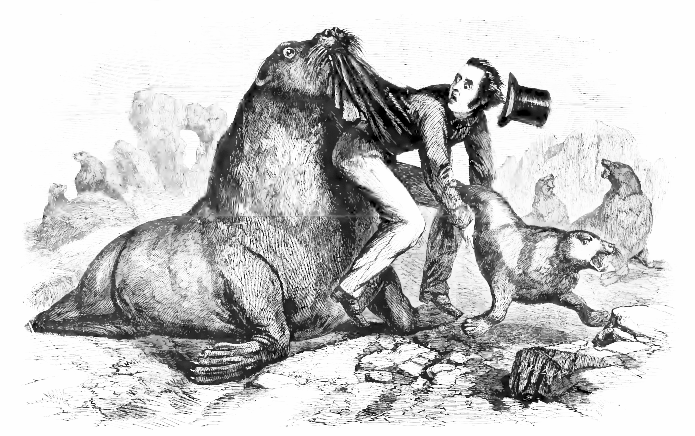 On the rocky islands off the coast of California, thousands of sea-lions may often be seen reposing in easy indifference, and forming an immense menagerie. At the approach of a stranger they generally take to the water, unless they are watching over their young, when with open mouths and protruding tusks, they warn the intruder agents too near an approach.
The Bloody Century 2
Takes the reader back to 19th-century America in all its gory glory.