
No. 54
Crime, Eccentricity, and the Sporting Life in 19th Century America.
November 14, 2011

Driven by Delusion

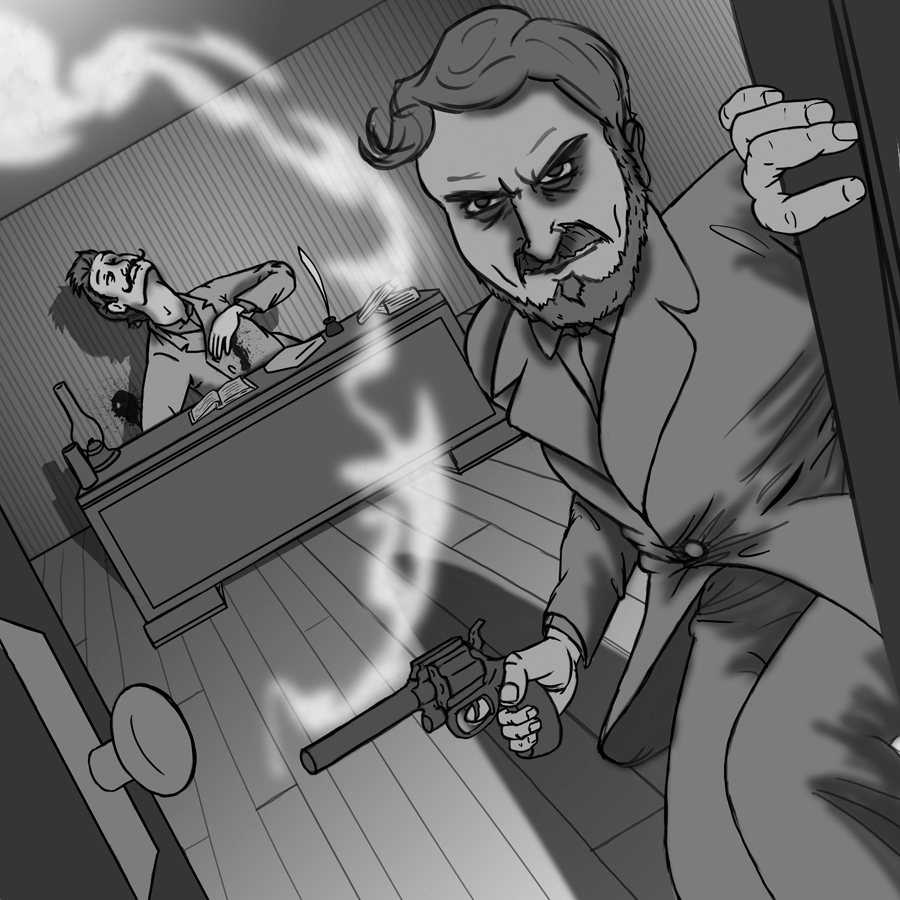
Henry Goodwin entered the office of his partner, Albert Swan, pulled out a revolver and shot him.
November 14, 2011

...
...

 Welcome to this week's Link Dump!Our host for this Friday is the handsome mascot (name unknown) of the S.S. Custodian, a cargo ship that was active during the first half of the 20th century.New research into the Battle of Hastings.The wonders of Mayan astronomy.The importance of horses in the Mughal Empire.A famous film of Bigfoot is probably a hoax.  I know, shocker.What it was like
More...
Strange Company - 3/27/2026
"As his son I am proud of hisefforts to succeed in life"Jefferson Randolph Smith IIIArtifact #93-2Jeff Smith collection(Click image to enlarge) oapy's son hires a legal firm to stop the defamation of his father's name. At age 30, Jefferson Randolph Smith III, Soapy and Mary's oldest son, was protecting his father's legacy and his mother's reputation from "libel" and scandal. He was also
More...
Soapy Smith's Soap Box - 10/13/2025
Whatever you believe about the guilt or innocence of Lizzie Borden, I have always believed film makers do a great injustice to the story by not beginning at the beginning- the death on March 26, 1863 of the first Mrs. Borden. In the dying moments of Sarah Morse, Emma takes on the weight of the care of her little sister, not yet three years old. Emma herself was just 12 on March 1st. Emma has seen her mother suffer for a long time, seen her pain and loss of little Alice Esther. Emma is old enough
More...
Lizzie Borden: Warps and Wefts - 3/26/2026
Youth With Executioner by Nuremberg native Albrecht Dürer … although it’s dated to 1493, which was during a period of several years when Dürer worked abroad. November 13 [1617]. Burnt alive here a miller of Manberna, who however was lately … Continue reading
More...
Executed Today - 11/13/2020
National Police Gazette, January 28, 1882Mrs. J.W. Gibbons was away from her home in Ashland, Kentucky, on December 23, 1881. She left behind her 18-year-old son Robert, her 14-year-old daughter Fannie, and 17-year-old Emma Thomas (aka Carico), who was staying with them. Mrs. Gibbons returned the following day to find her home burned to the ground and all three inhabitants dead.Read the full
More...
Murder By Gaslight - 3/28/2026
Stores come and go; office buildings gain and lose tenants. But the grief really hits when a shuttered movie theater remains empty, stripped of posters, concession signs, even the theater’s name. This is what remains of the Beekman Theater at 1271 Second Avenue, between 65th and 66th Streets. It showed its last film before abruptly […]
More...
Ephemeral New York - 3/23/2026
  [Editor’s note: Guest writer, Peter Dickson, lives in West Sussex, England and has been working with microfilm copies of The Duncan Campbell Papers from the State Library of NSW, Sydney, Australia. The following are some of his analyses of what he has discovered from reading these papers. Dickson has contributed many transcriptions to the Jamaica […]
More...
Early American Crime - 2/7/2019
He Hit the Pipe | Whipped By Women

Driven by Delusion

Delusions

Lawrence, Mass., August 29, 1885 - Inventor Henry Goodwin visited the Lawrence, Massachusetts, office of his business partner, Albert Swan. The two men spoke quietly for about half an hour, then Goodwin pulled out a revolver and shot Swan in the head, killing him. A crowd of people rushed to the office to see what had happened and Goodwin calmly told them “I have shot him, I meant to do it.” 

With the same calm determination, Goodwin went to the Lawrence police station and turned himself in. When asked why he had killed Swan, Goodwin replied, “I told him a year ago that unless he came to some settlement with me about our matters, I would have his heart’s blood. He has robbed me of my papers and my patents, and when I have undertaken to sell them I could not give a good title. He has robbed me of $40,000. I did it, I meant to do it, and I am here to take the consequences.”

The patents in question were for telephone switches; Henry Goodwin was a gifted inventor in the nascent field of telephony. He had turned to his boyhood friend, and successful businessman, Albert Swan, for help in securing patents for his new inventions. They successfully patented one of his switches but the patent for his greatest invention, a switchboard that could route hundreds of calls through a central location, was lost to the Molecular Telephone Company of New York because Swan did not finish the paperwork on time. As it turned out, Albert Swan had a business interest in the Molecular Telephone Company.

On his attorney’s advice, Henry Goodwin pled temporary insanity. Even before the patent deal, Goodwin had a history of irrational fear that his ideas were being stolen. He left two lucrative contracts in South America because in each case, he believed his employers were stealing his proprietary work. The same thing happened in the Midwest of the United States and by the time he returned to Lawrence his reputation prevented him from working anywhere.

But the jury did not buy it. The bad blood between Goodwin and Swan was well known in Lawrence. Goodwin had admitted to the murder and had admitted to warning Swan a year earlier. That sounded like premeditation and Henry Goodwin was sentenced to life in prison.

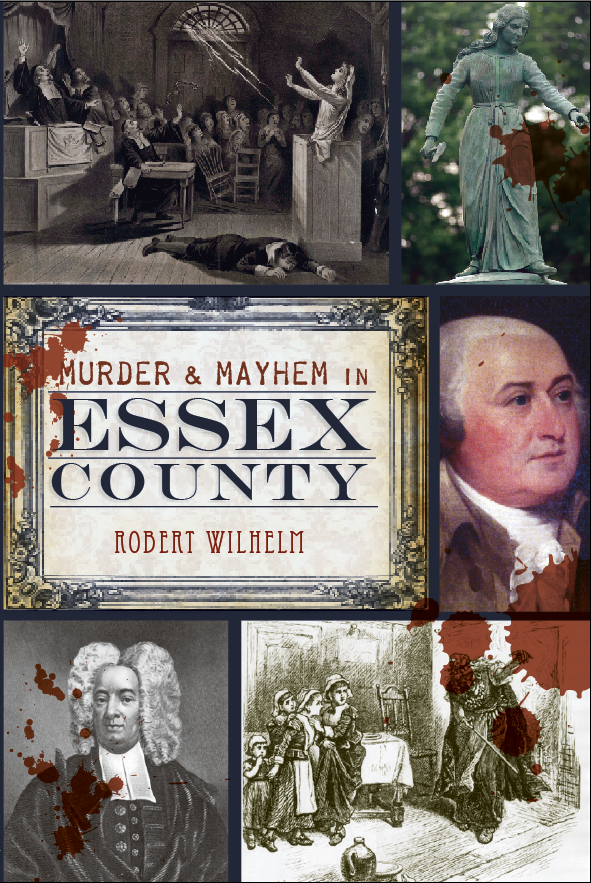
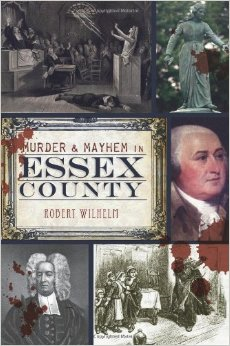
Details on this case and about two dozen other historical Massachusetts murders can be found in Murder & Mayhem in Essex County.