



Strange Company - 9/23/2026
Early American Crime - 2/7/2019

Soapy Smith's Soap Box - 10/13/2025
Murder By Gaslight - 9/19/2026
Executed Today - 11/13/2020

The Cardiff Giant | Did the Naughty Midway Dance
Bank Heist
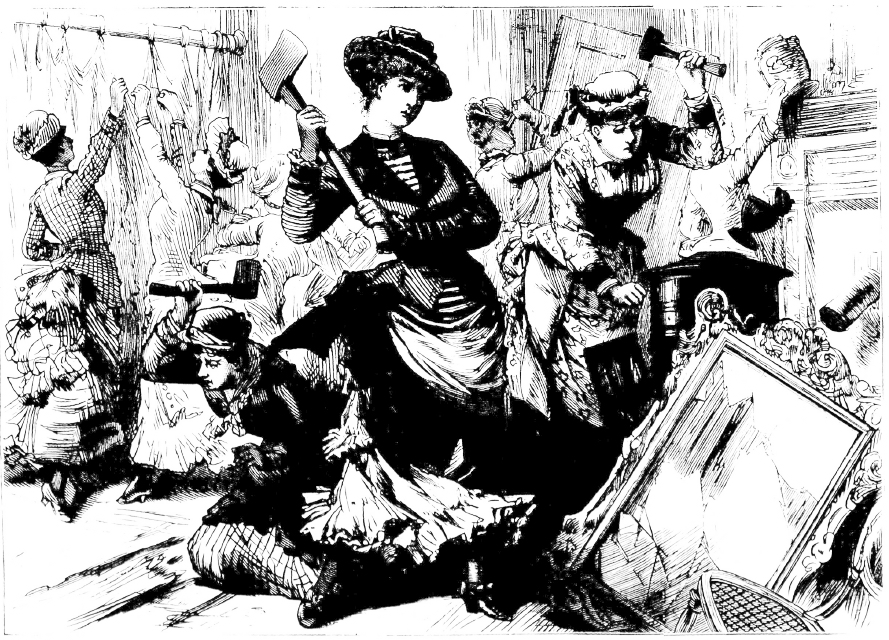
The White Hat of Lafayette, Ind., is burst up by a mob of women. [more]
A little before dark on the evening of Sept. 9, a crowd of indignant women, numbering about forty; reduced the bagnio of the notorious “White Hat,” on Sixteenth street, Lafayette, Ind., to a complete if not picturesque ruin. It was a quiet but determined vigilante committee, and they did their work well. White Hat’s dive has long gloried in the reputation of the hardest place in Lafayette. It was a free for all. Race, color or previous condition of servitude was no bar. It was a cross between an old woman’s home and a pest house, and a stench to the nostrils of the neighborhood. The place has long been under police surveillance, and on the night mentioned above it was raided. The male guests scaled the back fence and fled, but four women, including White Hat, were run in. Next morning they were given thirty days apiece in jail. This episode left the establishment, for the time being, tenantless.
At a little after 4 o’clock the women of the neighborhood began to congregate on an adjacent corner. The news that the ranch was to be demolished spread like wildfire, and the crowd soon numbered two score. When it reached these dimensions the onslaught was made. A few determined women led the van and the rest streamed after, over the front yard. The house is a double brick, and the dive proper was in the south side. Here attentions were directed.
One of the women had an axe. She was about forty-five years old, tall, strong, and when she brought the blade against the panels they went in with a crash. A few more blows sent the door of its hinges. Almost a dozen of the boldest rushed in and began to demolish the interior, while the timorous contented themselves in throwing stones on the outside.
For a few moments it sounded like a fusillade of artillery, and in that length of time there wasn’t a piece of glass the size of a half dollar in any window in the establishment. Meanwhile several other axes had been brought into play and all the window frames and door cases splintered. Even the floor did not escape and was badly backed, while big chunks of plastering were knocked bodily out of the ceiling.
In the course of the afternoon most of the effects of the White Hat outfit had been removed on a dray, so there were but few household goods for the crowd to wreak their vengeance on. A cooking stove was the most conspicuous object, and this was speedily reduced to junk iron. Their work of ruin occupied in all about half an hour and the crowd then quietly departed. They did not stop to talk the matter over, but went straight home, and the demoralized house was the sole evidence of what had occurred. The work was viewed by a large crowd of men but none offed to interfere. They knew better.
The end of the trouble was not, however, in the event described above. At 9:10 in the evening an alarm of fire came in and called the department to the vicinity. Flames were seen braking through the roof of the dismantled edifice and rapidly spreading along the woodwork. The fire was obviously the work in an incendiary, as there had been no fire about the premises during the day. A little brisk work soon extinguished the blaze with a big hole burst through the shingles and considerable damage to the interior. It will take quite an outlay of money to put the property in anything like a condition to rent again. The fire is generally accepted as a final notification to the outfit that their presence will be no longer tolerated in Linnwood. It was said on the ground that the parties who fired the house are well known and will use dynamite the next trip if it is occupied again by the same kind of cattle.
Reprinted from The National Police Gazette, September 26, 1885.
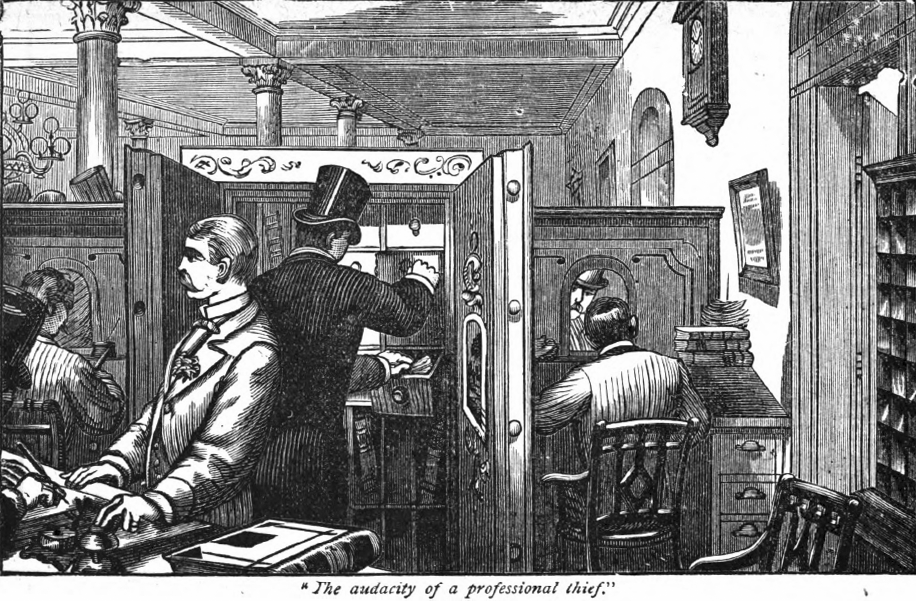
New York, New York, October 27, 1878 – The manager of the Manhattan Savings Institution found the vault in disarray the morning of October 27, 1878, and nearly $3 million in currency and securities was missing. In real dollars, it remains the largest bank robbery in history. The heist was tightly scripted and well-rehearsed; in timing and precision of execution, the robbery was the equal of a Broadway performance. And, like many great theatrical productions, there was as much drama in the wings as on the stage.
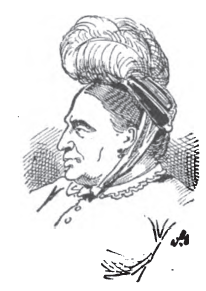 Frederika "Marm" Mandelbaum
The manager of this production was Frederika Mandelbaum—better known as “Marm”—who, in 1878, was the most successful fence in New York City. Marm Mandelbaum –5 foot 3, weighing 300 pounds—ran a dry goods store on Clinton Street and had warehouses full of stolen merchandise throughout the city. She had a hand nearly every major crime in Manhattan. She also ran a Faginesque school for child pickpockets. To keep her operations functioning she made regular payments to Tammany Hall and to policemen at every level.
Marm Mandelbaum was also famous for her dinner parties where politicians and other prominent New Yorkers would hobnob with equally prominent members of the underworld. It was at one such soiree in 1869 that she met George Leonidas Leslie, the future star of the Manhattan Savings Institution robbery.
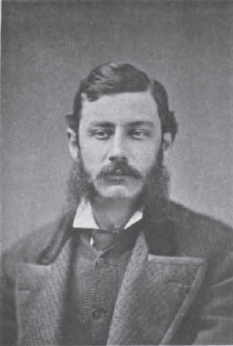
Leslie was the son of a wealthy Cincinnati brewer—he was charming, handsome, well-educated and had moved to New York with the express purpose of becoming a bank robber. He was a trained architect, adept at engineering and invention; he was a perfectionist who believed he had the tools and methods to turn bank robbery into a gentleman’s profession.
Marm Mandelbaum was charmed by Leslie and impressed with his approach to bank robbery. She was especially intrigued by a safecracking tool he had invented. He called it “the little joker”—it was a metal disk that, when placed behind the dial of a combination lock, would record the numbers of the combination. Although Leslie had never robbed a bank in his life, and his plan involved breaking into a bank twice—first to plant the little joker, then to reap the combination and open the vault—she gave him seed money and provided him with a gang.
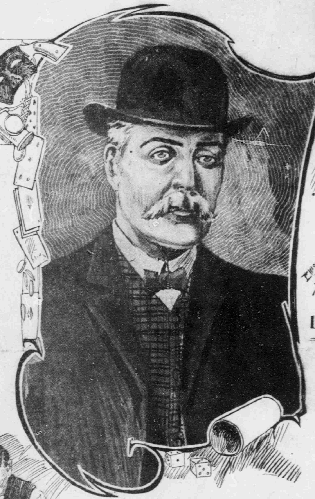
The gang consisted of hard core criminals, different from Leslie in every way. It included Shang Draper, saloon owner, and thief who earned the name “Shang” by his practice of shanghaiing sailors. He was also a noted conman, specializing in the sexual blackmail of the badger game. The muscle of the gang was Red Leary, who stood six foot four and had a hair trigger temper. While Leslie’s plan explicitly avoided violence, it didn’t hurt to have some intimidation, if only to keep the gang in line.
Their first target was Ocean National Bank in Manhattan. Shang Draper and the rest of the gang wanted to go in and dynamite the vault but that was not Leslie’s style. Leslie took three month to plan the robbery, using one of Marm’s warehouses to build a duplicate vault room for practice. He deposited his own money in the bank which provided him with an excuse to visit it frequently and become familiar with the setup and routine. He arranged to have one of Marm’s people, a young pickpocket named Johnny Irving, hired to sweep the bank after hours, and he rented an office directly above the bank. The heist ran like clockwork. The gang left with $800,000.
This became the template for a series of bank robberies planned by George Leslie and executed by Marm’s gang throughout America. Leslie left no clues and managed to remain unconnected to any of them. He maintained an image as a refined man-about-town associating with known criminals only during jobs or at Marm’s dinner parties.
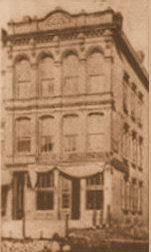
By the end of the 1870s George Leslie was planning his final job, robbing the Manhattan Savings Institution, but his plans were complicated by the failure of two other robberies. In 1876 he devised a plan for robbing the Northampton Bank in Northampton, Massachusetts. Leslie did not accompany the gang and they changed the plan. Instead of using the little joker, they roughed up a cashier to get the combination—violating Leslie’s edict against violence. Though they made off with $1.6 million in cash, bonds, and securities, most of the loot consisted of non-negotiable securities, virtually worthless to the thieves.
Leslie made sure he participated in the next robbery, the Dexter Savings Bank in Dexter, Maine, but it ended badly as well. Their inside man James Barron had a change of heart and would not let them into the vault. When Leary and Draper pistol whipped Barron he revealed that the vault was on a time lock and it would not open until the morning. They left with only$600 and James Barron died the next morning.
Now the charge against them would be murder. The gang members grew suspicious of each other, fearing if anyone were captured he would inform on the rest. To make matters worse, Leslie had been having affairs with Babe Draper and Kate Leary, the wives of Shang Draper and Red Leary. Leslie no longer trusted Marm Mandelbaum’s men and he was secretly shopping the Manhattan Savings plan to her chief competition, Traveling Mike Grady.
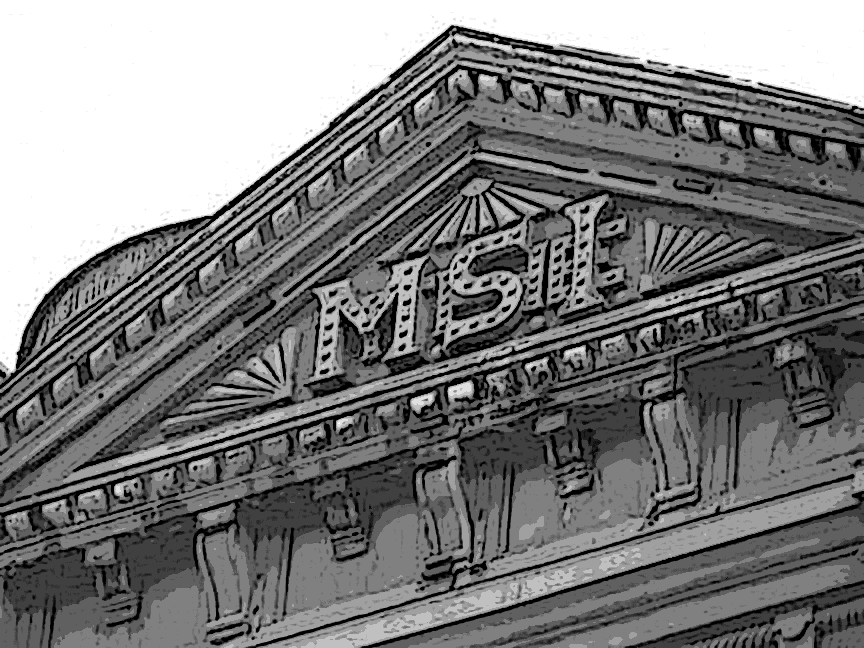
Leslie had been planning the Manhattan Savings job for three years—his inside man, Pat Shevlin had been working there that long. As all of Leslie’s robberies it had intricately planned and well-rehearsed but the vault was complicated and took three break-ins with his usual gang to get the combination. When he had the combination, Leslie convinced the gang to wait and break in a fourth time when there was sure to be more money in the vault. But he was planning to finish the job with another gang.
Travelling Mike Grady would supply that gang. Grady also provided a bodyguard, Johnny “The Mick” Walsh, because of Leslie’s fear of Marm Maldelbaum’s men. The fears were not unfounded. Shang Draper had found a camel hair shawl that Leslie had given Babe and traced it to its source. On May 29, 1878, while drinking in a Brooklyn saloon, Leslie was handed a note from Babe Draper. It said that Shang had found out about their affair and was looking for Leslie. She wanted Leslie to take her out of the city and gave an address to meet. Leslie told Johnny Walsh to stay behind while he took care of some business. It was the last time Walsh ever saw Leslie.
On June 4, 1878 George Leslie’s body was found at the foot of Tramp’s Rock, three miles outside of Yonkers, New York. He had been shot twice, once in the heart and once in the head. With the body was a small pearl-handled, two-shot pistol. It was a gun that Leslie had given Babe Draper for protection.
The Manhattan Savings Institution was robbed on October 27, 1878 by the original gang, now headed by Shang Draper, using George Leslie’s plan. The take was $2,747,700, however, as in the Northampton robbery, most of that amount was in non-negotiable securities. The net amount to the robbers was about $12,000. Without Leslie’s guidance they overlooked sacks of currency that were also in the vault, and made off with worthless paper.
Pat Shevlin had been promised $250,000 for his part in the robbery; he was given $1,200. Shevlin was not a professional criminal and it was not hard for New York City Police Detective Thomas Byrnes to obtain a confession from him and to get him to finger the rest of the gang. Jimmy Hope, William Kelly, and Banjo Pete Emerson were arrested for the robbery. Draper, Leary and the rest had already been arrested on other burglary charges. The police had everyone involved except George Leslie and Marm Mandelbaum.
Though he managed to keep a low profile during his career, after his death George Leslie was acknowledged by the police and the underworld alike as the “King of Bank Robbers.” One estimate said that 80% of all successful bank robberies in America between 1869 and 1878 were carried out by George Leslie. Though he did not live to see it, the Manhattan Savings Institution heist would be his masterpiece.
Sources:
- Conway, J. North. King of heists: the sensational bank robbery of 1878 that shocked America. Guilford, Conn.: Lyons Press, 2009.
- Pinkerton, Allan. Professional thieves and the detective: with a sketch by the author how he became a detective etc.. Repr. of the 1881.
- Walling, George W., and A. Kaufmann. Recollections of a New York chief of police an official record of thirty-eight years as patrolman, detective, captain, inspector, and chief of the New York police. Denver: Specially issued for the benefit of the Denver Police Mutual Aid Fund, 1890.
The Audacity of a Professional Thief.
Welcome to the National Night Stick
"We follow vice and folly where a police officer dare not show his head, as the small, but intrepid weasel pursues vermin in paths which the licensed cat or dog cannot enter."The Sunday Flash 1841


- 1810s
- 1820s
- 1830s
- 1840s
- 1850s
- 1860s
- 1870s
- 1880
- 1880s
- 1890
- 1890s
- Abduction
- Abortion
- Accident
- Actors
- Adultery
- Advertisement
- African Americans
- Alabama
- Alcohol
- Allan Pinkerton
- America
- Animal
- Assault
- Axe Murder
- Bank Robbery
- Barnum
- Baseball
- Beer
- Bet
- Bicycle
- Billiards
- Bio
- Boston
- Boxing
- Boys
- Broadway
- Brooklyn
- Brothel
- Buffalo
- Burglar
- Burglary
- Burlesque
- California
- Canada
- Cartoon
- Censorship
- Chicago
- children
- Chorus Girls
- Christmas
- Cincinnati
- Civil War
- Clergy
- Clubbing
- College
- Colorado
- Comstock
- Con Game
- Connecticut
- Counterfeit
- Court
- Cowboy
- Crime
- cross-dressing
- Crossdressing
- Cursing
- Dancing
- Deception
- Delinquents
- Denver
- Detectives
- Detroit
- Dime Novels
- Disaster
- Disguise
- Disorderly conduct
- Divorce
- Domestic Violence
- Drowning
- Duel
- Editorial
- Election
- Entertainment
- Event
- Fad
- Family
- Fashion
- Fight
- Fire
- Florida
- Food
- Football
- Forger
- Fraud
- Gambling
- Gangs
- Georgia
- Great Detectives
- Gunshot
- Hoax
- Holiday
- Horses
- Hotel
- Illinois
- Indiana
- Insanity
- Jail Break
- Jealousy
- Justice
- Kansas
- Kentucky
- Little Murders
- Louisiana
- Lynching
- Maine
- Marriage
- Maryland
- Massachusetts
- Medicine
- Michigan
- Minnesota
- Missouri
- Montana
- Murder
- Music
- Nevada
- New Hampshire
- New Jersey
- New Orleans
- New Year
- New York
- New York City
- Newsboys
- Newspaper
- Nudity
- Obscenity
- Ohio
- Opium
- Pennsylvania
- Performer
- Petrified man
- Photography
- Pickpocket
- Poisoning
- Police
- Police Gazette
- Politics
- Prank
- Prison
- Prostitution
- Railroad
- Rape
- Rats
- Reform
- Religion
- Reporters
- Revenge
- Rhode Island
- Robbery
- Romance
- Saloon
- San Francisco
- Scandal
- Science
- Seasonal
- Sex
- Slashing
- Society
- Spiritualism
- Sport
- Sports
- Spousal Abuse
- St. Louis
- Stabbing
- Steamboat
- Steamship
- Stock Broker
- Suicide
- Summer
- Tammany Hall
- Temperance
- Tennessee
- Texas
- Theatre
- Theft
- Thomas Byrnes
- Valentine
- Vigilantes
- Voyeur
- War
- Washington D.C.
- Wife beaters
- Winter
- Women