No. 7
Crime, Eccentricity, and the Sporting Life in 19th Century America.
February 24, 2011

Crush Collision!

Crush, Texas, September 15, 1896
February 24, 2011
...
...

Tag: Royalty

There are certain people who, for one reason or another, have a way of attracting people who are eager to murder them.  What makes the following case stand out is that exactly the opposite appears to have happened: A man was desperate to find someone willing to kill him, and he had a damned hard time achieving that goal.Samuel Resnick was a jeweler in Albany, New York, for nearly thirty
More...
Strange Company - 3/16/2026
"As his son I am proud of hisefforts to succeed in life"Jefferson Randolph Smith IIIArtifact #93-2Jeff Smith collection(Click image to enlarge) oapy's son hires a legal firm to stop the defamation of his father's name. At age 30, Jefferson Randolph Smith III, Soapy and Mary's oldest son, was protecting his father's legacy and his mother's reputation from "libel" and scandal. He was also
More...
Soapy Smith's Soap Box - 10/13/2025
Bond Street today is a pricey place to live. And so it was in the 1830s, when it became one of New York’s most exclusive enclaves. Wealthy residents fleeing the crowded and increasingly commercial neighborhoods below Houston Street sought refuge on this short little street, which only runs two blocks from Broadway to the Bowery. […]
More...
Ephemeral New York - 3/16/2026
Youth With Executioner by Nuremberg native Albrecht Dürer … although it’s dated to 1493, which was during a period of several years when Dürer worked abroad. November 13 [1617]. Burnt alive here a miller of Manberna, who however was lately … Continue reading
More...
Executed Today - 11/13/2020
About half past three, the morning of July 2, 1863, a young man on his way to work in Medina, Ohio, saw the home of Shubal Coy in flames. He alerted the neighbors, who came out to douse the flames with water. When the fire was under control, they went inside to look for the Coy family. They found Shubal lying in bed with nine stab wounds in his throat and breast, any one of them capable of
More...
Murder By Gaslight - 3/14/2026
The good-looking thirty-seven year old gentleman handling the reins behind the glossy matched pair pulling the spanking-new carriage drew the attention of more than one feminine eye.  Pacing down French St. at a sharp clip, the lady next to him, dressed neatly in a tailor-made suit with the latest in millinery fashion, smiled up at her coachman. Behind the lace curtains on the Hill section of Fall River, tongues were wagging about the unseemly pair. Lizzie Borden, acquitted of double homici
More...
Lizzie Borden: Warps and Wefts - 10/16/2025
  [Editor’s note: Guest writer, Peter Dickson, lives in West Sussex, England and has been working with microfilm copies of The Duncan Campbell Papers from the State Library of NSW, Sydney, Australia. The following are some of his analyses of what he has discovered from reading these papers. Dickson has contributed many transcriptions to the Jamaica […]
More...
Early American Crime - 2/7/2019
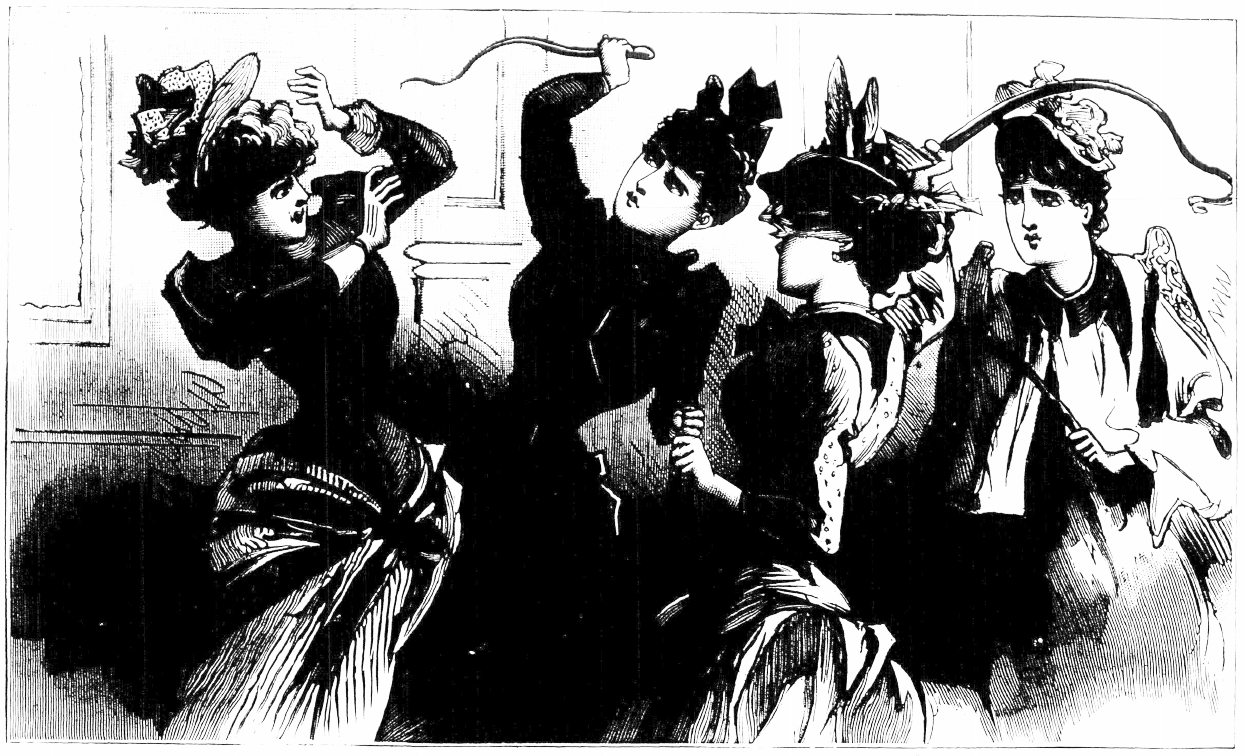
Chorus Girls in a Panic. | “Daredevil” Steve Brodie

Crush Collision!

Crush Collision Crush, Texas, September 15, 1896-At a little after 5:00 PM, two locomotives, each travelling at a speed of 45 miles per hour, collided head-on in the town of Crush, Texas.  The crash was intentional and had been anxiously anticipated by a crowd of at least 30,000 people who had been waiting all day. It was a publicity stunt by the Missouri, Kansas & Texas Railroad and had been highly successful up until the engines actually collided. In fact the Crush Collision might have become an annual event if the first one hadn’t resulted in at least one death and nine serious injuries.[more]

Crush Collision

William George Crush

The plan was conceived by William George Crush, General Passenger Agent of the M. K. & T. (Katy) Railroad. The trains were pulling too many empty passenger cars and Crush was looking for a way to fill them. Having observed that train wrecks always drew large crowds, he hit on the idea of staging his own. He may also have been inspired by a train wreck staged earlier that year by the Cleveland and Hocking Valley Railroad, near Cleveland, Ohio, that drew 40,000 spectators.

Crush chose a long flat stretch of land just north of Waco. It was a natural amphitheater surrounded on three sides by mountains. He set up a makeshift town— not unlike the temporary “hell-on-wheels” towns set up during railroad construction—and named it after himself: Crush, Texas. The collision was scheduled for 4:00 PM on September 15 and advertised by posters and newspaper ads throughout Texas. A passenger could ride to Crush from anywhere on the Katy line for $2.00.

Trains started arriving at Crush at 10:00 on the 15th and every five minutes after that another train would arrive. A crowd of at least 30,000 came to watch the collision. Some estimates were as high as 50,000 people which would have made Crush the largest city in Texas for that day. A tent provided by Ringling Brothers Circus served as a restaurant and ice water was made available. Lemonade stands and carnival games were set up, and Texas politicians took the opportunity to make stump speeches. Though McLennan County was officially dry, large amounts of whiskey were consumed.

Crush Collision

The "Handshake"

The crowd grew restless when 4:00 arrived and there was no collision. 200 hired constables held the spectators back as William Crush rode in front on a white horse threatening to cancel the show if they did not settle down.  He was waiting for the arrival of several more trains.  Finally at ten past five, Crush waved his hat signaling the engineers to start the show.

Two outdated diamond stack locomotives each pulling six boxcars gradually approached each other for a symbolic “handshake.” One engine painted red with green trim was numbered 999; the other green with red trim was numbered 1001. The boxcars bore advertisements for Ringling Brothers Circus and the Oriental Hotel (“The only modern hotel in Dallas.”) The trains backed up to their starting points then when the signal was given set off, full-tilt, towards each other. Each engineer forced the throttle and whistle open then jumped off the train. Torpedoes set along the track fired as each locomotive passed. Going a combined speed of 90 miles per hour, the two engines collided.  They angled upward, like two stallions fighting as the train cars behind telescoped into each other. Then, counter to what Crush had been assured by his engineers, the boilers exploded.

Amid the smoke and steam, timber bolts and pieces of hot iron- from entire boiler plates to shards of shrapnel-filled the air. People in the crowd struck by the debris suffered fractured skulls and broken bones. A flying bolt took out the right eye of photographer J. C. Dean. 19-year-old Earnest Darnelle who had been watching from a tree was struck by five feet of heavy chain.  He fell to earth, his head nearly severed.

crush-crowd

Aftermath

The crowd stood in silence for several seconds as chaos ensued all around them. Then all at once, those still standing, rushed to the crash to grab souvenirs.  At 6:00 return trains began leaving.

The M. K. & T. railroad cleaned up the mess and dismantled the town of Crush forever. They paid all claims without a fight. William George Crush was fired as General Passenger Agent, but it was all for show; he was hired back the next day.


crush-collision-march

Crush Collision March

Composer Scott Joplin may have been in the crowd that day.  He wrote a song, “The Great Crush Collision March” commemorating the event.


The Dallas Morning News, September 16, 1896
The Dallas Morning News, September 17, 1896
The Dallas News, August 8, 1954
http://www.baylor.edu/lariat/news.php?action=story&story=10054